
Competency Frameworks in Action: From Definition to Daily Decisions
A practical, five stage process for embedding competency frameworks into hiring, performance reviews, and development across GCC organizations.

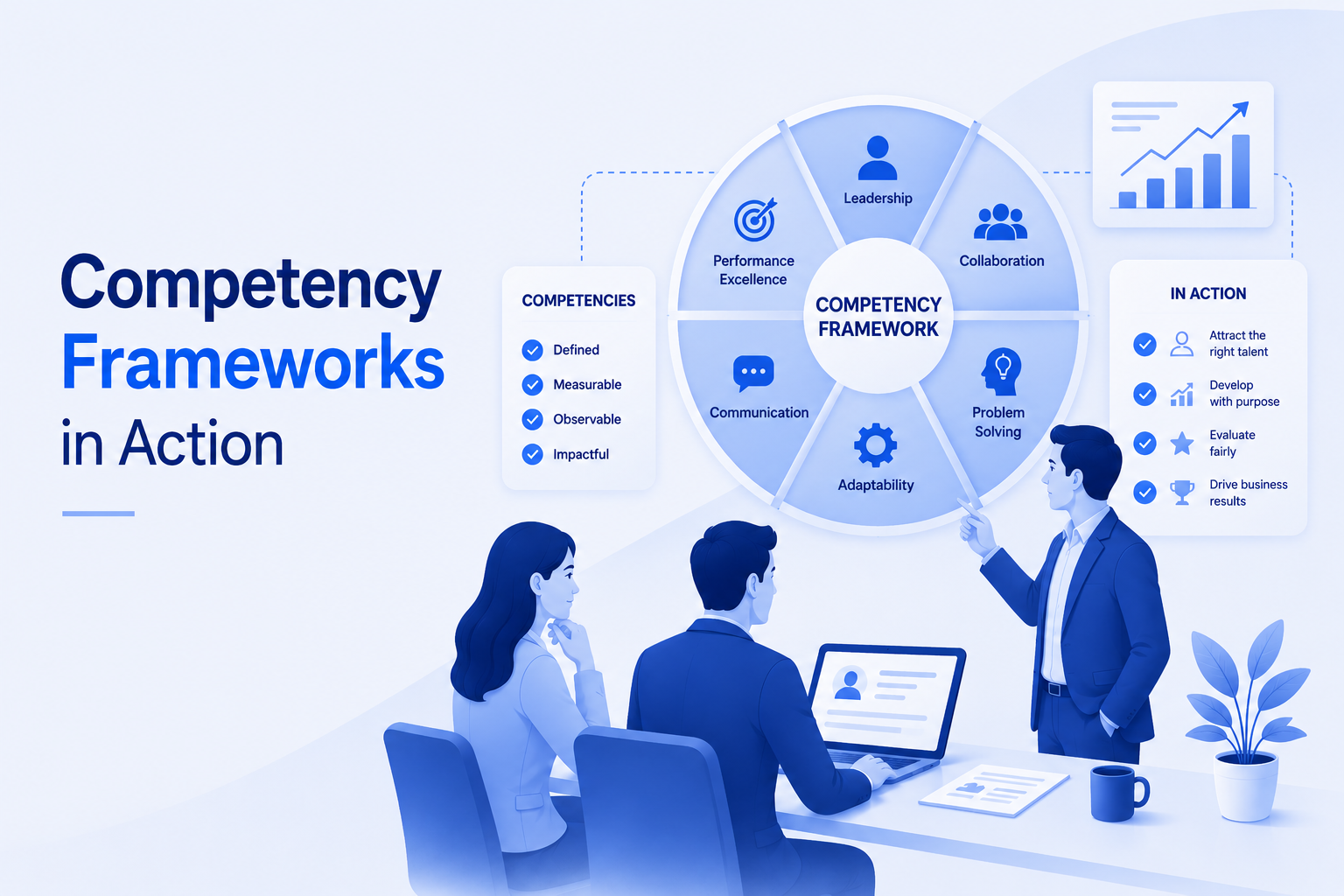
Competency Frameworks in Action: From Definition to Daily Decisions
A practical, five stage process for embedding competencies into hiring, performance, and development across GCC organizations.
From Framework to Function: Turning Competencies into Measurable Hiring Outcomes
A competency framework only creates value once it leaves the document and enters daily decisions: who gets hired, who gets promoted, and who gets trained next. This article builds on our earlier guide on what a competency framework is and how to develop one, and walks through the operational process that turns a finished framework into a working system across hiring and people management.
Why frameworks stall after launch
Most organizations invest real effort in building the framework itself: job analysis, stakeholder interviews, proficiency scales. Far fewer build the process that keeps it alive afterward. Without a clear rollout sequence, the framework becomes a static reference document rather than a tool that shapes recruitment, performance reviews, and learning paths.
This gap matters most in recruitment, where competency clarity directly affects how efficiently roles get filled. As outlined in our recruitment efficiency metrics guide, structured evaluation criteria are one of the strongest levers for reducing time to hire and improving candidate quality. A competency framework, used correctly, is what supplies those criteria.
The operational process: from framework to function
Once core and role specific competencies are defined, as detailed in our original framework article, the work shifts from definition to integration. The process below shows how a framework moves from a finished document into the systems your teams use every day.
Stage 1: Finalize competencies
Confirm core, role specific, and where relevant, leadership competencies, each defined as specific, relevant, and actionable. This stage closes out the framework design phase covered in our earlier article.
Stage 2: Embed in job profiles
Every job description should reference the competencies tied to that role, alongside required proficiency level. This is what gives recruiters and hiring managers a shared, measurable standard instead of a subjective impression of fit.
Stage 3: Build interview scorecards
Translate each competency into observable interview questions and behavioral indicators. Structured scorecards reduce interviewer bias and shorten decision time, directly supporting the time to hire and quality of hire metrics covered in our recruitment efficiency guide.
Stage 4: Link to performance reviews
The same competency language used in hiring should reappear in performance conversations. This consistency is what allows employees to see a continuous line between how they were hired, how they are evaluated, and how they grow.
Stage 5: Review and refine annually
Roles evolve, and so should the competencies attached to them. An annual review cycle, ideally involving both HR and line managers, keeps the framework relevant rather than letting it quietly go out of date.
Recruitment versus performance: where competencies show up differently
In Recruitment
- Used to screen and shortlist candidates
- Drives structured interview scorecards
- Supports faster, more consistent hiring decisions
- Reduces reliance on gut feel evaluation
In Performance Management
- Used to benchmark current performance
- Identifies development and training needs
- Supports promotion and succession decisions
- Anchors goal setting in measurable behavior
Making the framework sustainable
A competency framework is not a one time deliverable. It is an operating layer that should sit underneath hiring, performance, and learning decisions at the same time. Organizations that treat it this way see more consistency across HR functions and a clearer link between who they hire and how those people are later developed and promoted.
For organizations still in the design phase, our earlier guide on building a competency framework remains the right starting point. For teams focused on tightening recruitment specifically, the recruitment efficiency metrics guide outlines the indicators that a well embedded framework should move.
Build a Competency Framework That Performs
Procapita Group helps organizations across the GCC design and operationalize competency frameworks that connect hiring, performance, and growth.
Talk to Our Team